Sewage Backup Cleanup in Cedar Park, TX
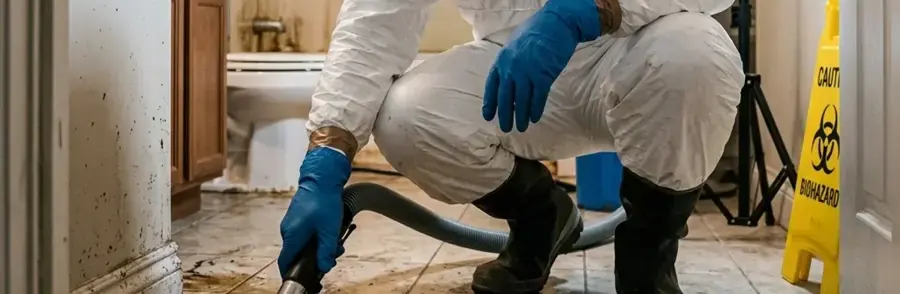
Sewage backup is Category 3 the moment it happens. The mitigation team contains the area, removes contaminated porous materials, treats every surface and dries the structure under protective equipment.
(888) 926-4485Get the Cedar Park drying crew moving- IICRC S500 drying goal
- Truck-mounted extraction
- 24/7 dispatch
What to do the moment you find sewage backing up
Stop using the drains
No flushing, showers, laundry or dishwasher until the line is cleared.
Keep everyone out
Keep children and pets away from the affected rooms.
Do not touch it bare-handed
Skip the mop and bleach: contaminated water needs protective equipment.
Call for sewage cleanup
Get containment and removal started before it spreads into walls.
The standard behind sewage backup cleanup in Cedar Park
Rapid local response
The Cedar Park restoration crew answers 24/7 and treats every active leak or flood as urgent, nights and weekends included.
IICRC S500 drying standard
The drying team maps moisture first, sets air movers and LGR dehumidifiers to the load, and keeps equipment running until the readings say dry.
Claim-ready documentation
Timestamped photos, a moisture map and daily drying logs go into the file an adjuster reviews.
Hill Country water experts
Slab foundations over limestone, attic air handlers and Brushy Creek cloudbursts shape how water moves through a Cedar Park home.
What does sewage backup cleanup cost in Cedar Park, TX?
In Cedar Park, TX, sewage backup cleanup typically runs $2,500 to $12,000 or more. The drivers are the square footage affected, how far it wicked into walls, how much flooring and drywall comes out and how long it sat before cleanup.
Bathroom only
$2,500 to $4,500- Containment and PPE
- Flooring and lower drywall removed
- Antimicrobial and drying
Bathroom and adjoining rooms
$4,500 to $8,000- Carpet and pad bagged
- Flood cuts in several rooms
- HEPA air scrubbing
Large or long-standing
$8,000 to $12,000+- Whole-floor removal
- Cabinet removal
- Extended drying
These are typical ranges, not a quote. The drivers are the water category, the square footage, the material class and how fast drying started. Try the water damage cost calculator for a planning number.
How sewage backup cleanup is handled in Cedar Park
- 1
Walkthrough and moisture map
The tech who does the walkthrough finds the source, confirms it is stopped, and maps moisture with pinless meters and thermal imaging before any equipment goes down.
- 2
Extraction
The extraction crew pulls standing water with truck-mounted extraction, so the water leaves the house instead of wicking into the next room.
- 3
Drying set to the load
The drying team places air movers and LGR dehumidifiers for the evaporation load of each room, and opens cavities only where the readings call for it.
- 4
Verify and document
Readings are logged daily, and equipment comes out once wet materials sit within 2 to 4 points of a dry reference material in the same house.
A sewage backup in a Cedar Park home usually comes up through the lowest drain on the slab: a shower, a tub or a toilet on the ground floor. Tree roots in older clay or cast iron lines, grease buildup, a collapsed section of pipe or a city main overwhelmed during a storm can all push waste back into the house. However it starts, the water is Category 3, and it is handled that way from the first minute.
Why sewage is a different kind of cleanup
Sewage carries bacteria, viruses and parasites. The EPA page on sanitary sewer overflows explains the health risk, and the IICRC S500 standard sets strict rules for the work:
- Protective equipment at a minimum of gloves, boots, eye protection and a respirator
- Containment with plastic barriers and HEPA air scrubbers so the rest of the house stays clean
- Porous materials touched by sewage, such as carpet, pad, drywall and insulation, are removed and bagged, not dried
- Hard surfaces are cleaned and treated with an EPA-registered antimicrobial, left for its full dwell time
How the mitigation team works the job
The extraction crew removes the liquid and solids first. The tech who does the walkthrough then maps how far the water wicked into walls, cabinets and baseboards, and the flood cuts go above the highest wet reading. After removal, cleaning and antimicrobial treatment, the drying team dries the slab and the open cavities with air movers and LGR dehumidifiers, logging readings to the drying goal.
Stop using every sink, toilet and appliance that drains into the line. Each flush or load pushes more sewage into the house.
Finding the cause
A plumber camera-inspects the line and clears or repairs it. If the backup came from a city main during heavy rain, the City of Cedar Park utilities department is the contact. A backwater valve on the house line is a common fix for homes that back up in storms.
Storm water that enters through doors is covered under flash flood cleanup. After cleanup, the structural drying process takes over.
Sewage Backup Cleanup across Cedar Park and nearby towns
The Cedar Park restoration crew works every street in 78613 and 78630, plus the towns around it, 24/7.
Drying crews cover all of Cedar Park, from Buttercup Creek and Cypress Creek to Twin Creeks and the neighborhoods along Brushy Creek.
Coverage also runs into Leander, Round Rock, Brushy Creek, Jollyville, Anderson Mill, Four Points and northwest Austin.
See every neighborhood and ZIP coveredSewage Backup Cleanup questions in Cedar Park, TX
Can sewage-soaked carpet be cleaned and kept?
No. The IICRC S500 standard calls for removal of carpet and pad touched by Category 3 water.
Is bleach enough to clean a sewage backup?
No. Porous materials have to come out, and hard surfaces need cleaning and an EPA-registered antimicrobial left for its full dwell time.
Is it safe to stay in the house?
Stay out of the affected rooms. Containment and HEPA air scrubbers keep the rest of the house usable in many cases, but people with health concerns may want to stay elsewhere.
What causes sewage backups in Cedar Park?
Tree roots, grease buildup, collapsed pipe sections and overwhelmed city mains during heavy rain are the most common causes.
Is sewage backup covered by insurance?
Many policies need a sewer or water backup endorsement for this kind of loss. Coverage depends on your policy, so it is worth checking with your own insurer.
How long does sewage cleanup take?
Removal and treatment usually take a day or two, followed by three to five days of drying.
Sewage Backup Cleanup in Cedar Park? Call now for emergency water removal.
Water that reaches the slab and the bottom plates is the hardest part of a house to dry. The drying team extracts first, sets equipment to the load and keeps it running until the meters agree.